
 Caleb Harrelson
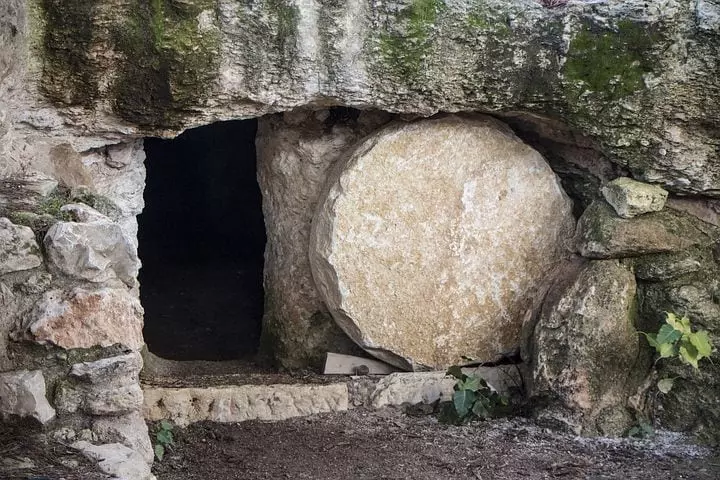
[Originally published as the first section of Three Reasons the Resurrection of Jesus is True!]
What is the most memorable event in your life? Several events stand out in my own life: when I surrendered my life to Christ, my wedding day, and the birth of our four children.
What is the most memorable and significant date in world history? The resurrection of Jesus from the dead!

If the resurrection of Jesus is true, all other religions logically can’t be true. Either Jesus is who He said He is or He was a liar. He is either the Messiah who fulfilled Old Testament prophecies, God in the flesh, our substitute to pay for our rebellion against God and the King of the Universe or He is not. There is no third option.
Many skeptics question if the resurrection really happened because they think it was made up for Christians to get power and control people.
Also, many skeptics claim that “the resurrection of Jesus is not unique because Jesus is just like every other religious claim: a story about a messiah figure dies and rises from the dead and promises the afterlife.”
Are those claims true? In the second section, I will lay out three reasons for why we can know that the resurrection of Jesus is true:
- Empty Tomb
- Early testimony & Conversion of an enemy
- Expected Testimony
First, let’s start with the definition of “resurrection.”
The Jewish concept of resurrection was a physical or bodily one, not just an immaterial resurrection. They don’t just believe that Jesus “continued in their memories or his legacy lived on.” In the words of Bible Scholar N.T Wright:
“Resurrection” was, by definition, not the existence into which someone might (or might not) go immediately upon death; it was not a disembodied “heavenly” life; it was a further stage, out beyond all that. It was not a redescription or redefinition of death. It was death’s reversal.” ~Resurrection of the Son of God, N.T. Wright, pg. 83
Advertisement Below:
Jews and pagans all understood that the concept of “resurrection” meant a “physical resurrection” yet pagans denied that it was possible (see Homer, Plato, Aeschylus). In fact, Historian Edwin Yamauchi says that Egyptians did NOT believe in a bodily resurrection.
Furthermore, most Jews expected a future bodily resurrection “at the revolution of the ages” when the soul of the righteous “return to find in chaste bodies a new habitation.” (Jewish Wars 3.374; Antiquities 18. 18.14-15; Isaiah 29:19; Ezekiel 37:1-14; Daniel 12:2-3.)
However, the resurrection of Jesus was a surprise in the 1st Century. In the words of New Testament professor and author Justin Bass:
“Any Jewish belief in a resurrection was always in the future. There was no expectation for a single person to be resurrected in the middle of history.” ~The Bedrock of Christianity, Justin Bass, 127.
To further put to rest the idea that 1st Century Jews may have been believed resurrection to mean a “non-bodily” resurrection, the late Christian Apologist Dr. Norman Geisler said:
“The resurrection cannot verify Jesus’ claim to be God unless He was resurrected in the body in which he was crucified. That body was a literal, physical body.” ~ Geisler, BR, 36.
The resurrection is a completely unique event in history. Other people rose from the dead in the Bible, but Jesus raised himself up from the dead. He was the “firstfruits” for the future resurrection that will occur at the end of the world (see 1 Cor. 15:20–23).
Additionally, one of the basic reasons that the death of Jesus does not resemble the stories told in mystery religions about “dying and rising gods” is that,

“None of the so-called savior-gods died for someone else. The notion of the Son of God dying in the place of his creatures is unique to Christianity.” ~Nash, The Gospel, and the Greeks, 160.
These stories end up only superficially resembling Jesus, only describing the resurrection as spiritual, and most of them are so late that they most likely borrowed from Christianity, except for the older story of Osiris. But, when one looks at Osiris, it is clear that he is not similar at all: in the story, he is cut into 14 pieces, spread across Egypt, and then reassembled and brought back to life by the goddess Isis.
Also unlike pagan mythologies that have a cyclical dying and rising deity that corresponds to the yearly seasons or something else, the life, death, and resurrection of Jesus are unique as He died only once.
Lastly, pagan mythologies and other religions typically have one person claiming to receive a “special revelation,” whereas Jesus died and rose with many eyewitnesses to test his claims.
“None of the other so-called resurrected gods of the mystery religions is a genuine historical figure. In contrast, Jesus is depicted in the Bible as a real historical person. The Gospel accounts contain many anchors that hold in place, so to speak, vessels full of evidential treasures for anyone to examine, especially for those who wonder about the truth of Christianity.” ~Sean McDowell, Evidence That Demands a Verdict, 307.