 Dr. Tas Walker
[Originally published as Eromanga Sea: Noah’s Flood covered Australia]
You can see evidence for Noah’s Flood everywhere when you know what to look for. Geology books, museums, and fossil websites describe the effects of the Flood in graphic detail, even giving special names to different aspects of it?
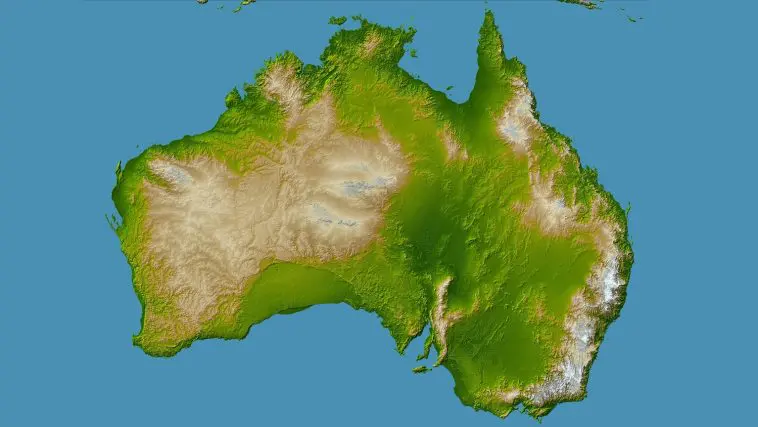
An article from the science section of the Australian Broadcasting Corporation says, “About one hundred and ten million years ago a shallow sea covered what is now arid inland Australia.”
This fossilized shallow sea has been called the Eromanga Sea and it provides us with evidence for Noah’s Flood. The Bible says:
The waters increased and lifted up the ark, and it rose high above the earth. The waters prevailed and greatly increased on the earth, and the ark moved about on the surface of the waters. And the waters prevailed exceedingly on the earth, and all the high hills under the whole heaven were covered. (Genesis 7:17–19)
The reason why most scientists can explore this amazing geological evidence but not connect the dots is that they have the wrong “search image” in their minds. (These days we are well aware of how a scientist’s search image can affect their work.) The search philosophy they use was purposely designed in the early 1800s to avoid seeing Noah’s Flood. Some call that search image ‘uniformitarianism’, although geologists today prefer the term ‘actualism’.
Let’s mention a few of the many reasons why they don’t see the Flood.
- The dates are wrong. They say it was 100 million years ago, so no one connects that it is actually Noah’s Flood they are looking at. But the dates were assigned by assuming the sediments were deposited slowly, when in fact they were deposited catastrophically. Hence the imaginary time disappears. Geologists these days routinely recognize that sedimentation was rapid, especially considering the enormous dinosaur fossils preserved in the area.
- It was not a past environment. They assume they are looking at environments that existed for thousands, even millions of years. However, the kilometre thicknesses of sediments were deposited rapidly over a period of weeks or months during the Flood, as the waters were rising on the earth.
- The vegetation did not grow in the area where the fossils are now found. While geologists commonly assume the vegetation grew where it was buried, it was carried into the area after being ripped out the places where it did grow. What we are looking at as we examine today’s fossils was not a lush rainforest but the place where the debris was dumped.
- The animals found in these locales did not normally live in the area. While this is commonly assumed, the fossilized animals were carried in by the floodwaters, some after death and some while still alive. The live ones continued to flee the rising waters (for a while) and we find their footprints at various places. The dead ones were buried in sediments in the area (had to be buried rapidly and lots of sediment). That is why is it common to find land and sea animals buried together. Also it is common to find animals and plants from warm climates fossilized in areas that now have cold climates.
- The sea covered the whole of Australia, not just a proportion of it. In the article linked to above, geologists show the extent of the inland sea according to the extent of the sediments that exist now. From the diagram we see there was a lot of Australia that was supposedly not covered with water at that time. However, the sediments covered a much greater area in the past. Kilometres of thickness and vast areas of sediment were eroded away. This happened later in the Flood, especially as the floodwaters receded from the land.
Next time you see a display about the geological history of Australia, or wherever you live, realise that they are reporting evidence for Noah’s Flood. Once you understand the way they think, you can connect the dots and see Noah’s Flood in graphic detail.