
 Jay Wile
[Originally published as Stone-Age Animation]
It’s sad to see how evolutionary thinking causes so many misconceptions in the realm of science.
For example, evolutionary thinking has produced the idea that “stone age” people were primitive and barbaric. Of course, as is the case with most evolution-inspired ideas, this one doesn’t stand up in light of the evidence. The more research is done, the more we know that “stone age” people had an advanced culture all their own.1

A finding that I read about in Science News adds more evidence to support the fact that there was nothing very “primitive” about ancient people.
The article starts out like this:2
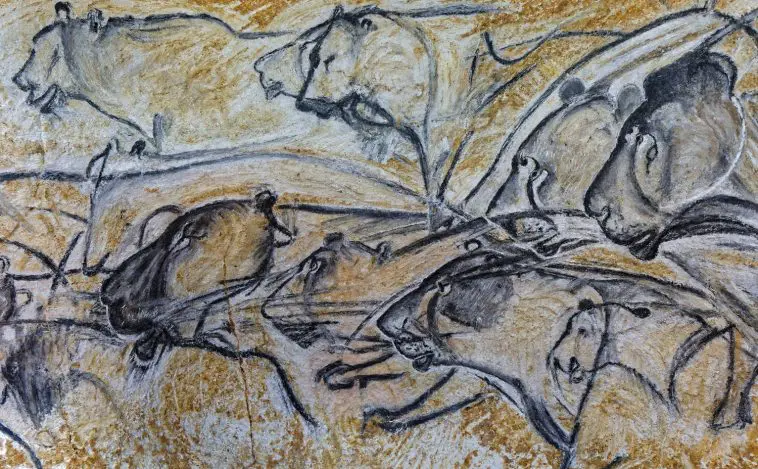
By about 30,000 years ago, Europeans were using cartoonlike techniques to give the impression that lions and other wild beasts were charging across cave walls, two French investigators find. Artists created graphic stories in caves and illusions of moving animals on rotating bone disks…
While it’s very interesting that ancient artists were painting scenes that produced the impression of motion, the thing that really caught my eye was the part about the rotating bone disks. The article has three pictures that show how one of them worked (you can see them here), and when I saw those pictures, I immediately recognized it as a thaumatrope.

However, according to everything I have read, the thaumatrope was invented in 1825. For example, here is how Ray Zone puts it in his book, Stereoscopic Cinema and the Origins of 3-D Film, 1838-1952:3
The fundamental principle behind the movies is persistence of vision, when a visual impression remains briefly in the brain after it has been withdrawn. This principle was demonstrated in 1825 with an optical toy called the “Thaumatrope,” invented by Dr. John Ayrton Paris.
Obviously, Mr. Ray is off by a few years!

To see how a thaumatrope works, look at the picture at the top of the post. It shows two sides of a disk. One side has a bunch of flowers painted on it, and the other has an empty vase painted on it. When the disk is flipped back and forth quickly, it looks like the flowers are in the vase. The very annoying animation shown here is a demonstration of how that happens. Aren’t you glad I didn’t attach that to this post?
If you looked at the three pictures from the Science News article, you can see that the bone disk worked on exactly the same principle. Instead of making an illusion that put two drawings together, however, the stone-age disk produced the illusion of an antelope-like animal sitting down and standing up. So long before 1825, persistence of vision was being used to produce illusions. In this case, it was the illusion of motion.
Now think about that for a moment. According to scientifically-irresponsible dating techniques, this thaumatrope is supposed to be 30,000 years old. Evolutionists have tried to convince us that people living that long ago were primitive and barely human. Instead, what we find is that they used a technique which was supposedly invented by “advanced” people less than two hundred years ago. In other words, these supposedly “primitive” people were actually the first to see what persistence of vision can do, and they exploited it for their own amusement.
The more we learn about ancient people, the more the creationist view that people have always been very intelligent is confirmed.
References
- Julien Riel-Salvatore, “A Niche Construction Perspective on the Middle–Upper Paleolithic Transition in Italy,” Journal of Archaeological Method and Theory 17(4):323-355, 2010.
- Bruce Bower, “Stone Age artists produced movies,” Science News, June 30, 2012, p. 12.
- Ray Zone, Stereoscopic Cinema and the Origins of 3-D Film, 1838-1952, University of Kentucky 2007, p. 22.