 Todd Wood
[Originally published in November, 2025 as Impressions on my first ETS meeting]
I’ve been in or around Christian academia for 25 years now, but I had never attended the annual conference of the Evangelical Theological Society (ETS) until just last week. Why? It’s not my field. It’s expensive. With travel days, it takes out a whole week. As someone entrusted with donor money for Core Academy, I have spent very, very little on conference travel for myself.
This year, a donor supplied the cost for attending the ETS meeting in Boston. “You have to go. It’s important that creationists be there.” Who can argue with that? Especially when I’m not footing the bill! So that’s how I found myself on a very early flight to Boston last Monday morning.
For those unfamiliar, ETS is the main organization for theologians and Bible scholars on the more or less conservative end of the theological spectrum. For example, these would be folks who affirm the inerrancy of Scripture.
The conference resembled other academic conferences I’ve been to. There are parallel sessions where people present papers. There’s a big exhibit hall with discounted materials for conference attendees. There are ancillary meetings, receptions, and whatnot sponsored by affiliated societies or schools. There’s a lot going on, and I’m probably not doing it justice.
My first impression was culture shock from the style of presentations.
At a science conference, we have different concurrent sessions, but at most the presentations might be 20 minutes. More typically, they’re 12 minutes with 3 minutes for Q&A. There’s usually some kind of abstract for a science conference, so you get the idea of what the presentation will be about beyond just a potentially vague title. As a result, you can plan your schedule carefully and everything moves along at a pretty good clip. If you accidentally get into a talk not to your taste, just wait 15 minutes, and there’ll be something else. The talks are always illustrated with some kind of slide show, which is nice for us visual learners.
At ETS, the talks are much longer, mostly 30-40 minutes, and the presenter almost always reads a paper to you without any slides. For me, that took a lot of discipline to sit there and listen without anything to look at. This whole style of presentation was just really difficult for me to adjust to, but that’s on me of course. Maybe I’d feel different if I’d been trained in this discipline?
There were several big creation-related things that I attended. First, Marcus Ross gave a critique of Swamidass’s Genealogical Adam book. That paper is published and is available at Marcus’s Academia page. It was a good science presentation with slides and graphs and so forth. Then Josh Swamidass got up in the Q&A and said that Marcus had his science wrong. The reaction here was quite interesting, and I’ll come back to that.
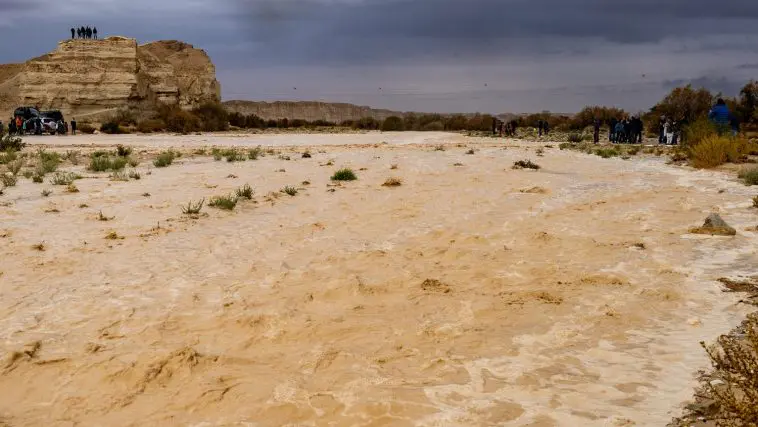
Later in the conference, there was a whole panel on Hugh Ross’s new Flood book Noah’s Flood Revisited. Ross presented first with his ideas about a local Flood. Gregg Davidson gave a critique of Flood geology. Tremper Longman gave a few mostly friendly critiques of Ross’s book. Then Matt McLain gave a more pointed critique of Ross’s approach. The Q&A kind of turned into a dogpile on Matt, which was kind of curious. It’s hard for me to gauge exactly how that went, because it was the first panel I’d ever seen at ETS, but honestly I had a strong reaction.
First, I’m no fan of Hugh Ross and RTB. To be blunt, I find their approach to science sloppy and generally unrelated to actual scientific claims. In his ETS presentation, Ross claimed that the scientific consensus was converging on 40,000-50,000 years bp (before present) for the first evidence of cooking, particularly in Europe.
Most importantly, Ross claimed that this was the basic consensus, not that an examination of individual evidences supported his contention. I knew that was nonsense. From my reading of the literature, anthropologists are looking at the period of about 200,000 years bp for the first evidence of cooking in Europe. I also knew there is extraordinary evidence of cooking and food processing at Gesher Benot Ya’aqov conventionally dated to 780,000 years bp. Neandertals at Shanidar were making a kind of “bread” around 70,000 years bp on the conventional timeline.
Even if I accept his old earth timeline, Ross’s presentation of the archaeological consensus couldn’t be more fanciful. Evidence of cooking is not limited to Homo sapiens and it far antedates 50,000 years bp on the conventional timeline. Ross’s presentation is factually incorrect.
Yet the questioners were more than willing to give him the benefit of the doubt, and I found that fascinating. I know there were young-earth people in the audience because they came up to Matt and me after the session concluded and thanked us for being there and commended Matt for his presentation.
But as I listened to the questions and discussion, it really felt like I was in a whole different arena of evaluation. I don’t think anyone would have cared about the nitpicking details that I just summarized in the previous paragraph. It felt like they were presenting “interpretations” of science, and as long as you didn’t contradict a major scientific claim, it felt like people treated it like a difference of opinion. This interpreter thinks it means this, while that interpreter thinks it means that, it’s all fine.
Now obviously, I’m reacting from my own set of biases. Matt’s presentation was definitely provocative conceptually, and I can easily understand why it triggered strong reactions from certain audience members. Still, the near disinterest in Hugh’s claims baffled me. This would not stand at a science conference. There, scientists would get up in the Q&A and absolutely dissect his position, citing the sorts of evidence I summarized above. Listeners would come away thinking, “that was not a very good talk” and they’d be right. At ETS, it felt like the responses were limited to “I just don’t know. I just don’t think so.”
This scientific allegiance to evidence is my response to a repeated claim against Matt. “The consensus of scientists is that the earth is millions of years old. I don’t know any scientist who doesn’t interpret the Bible like Matt does who thinks the earth is young.” Except that consensus is a lousy guide in science. So many times the consensus has been wrong in science on big matters and trivial ones. The question for a scientist is not what the consensus thinks. Who cares? The question is, what does a careful consideration of the evidence show? The evidence is king, not opinions or interpretations.
Maybe I’m overreacting though. It’s my first ETS, and that was my first experience at a panel, and Hugh Ross always triggers me. But if I could speak to the ETS audience, I would tell them to stop letting people intimidate you with the “scientific consensus.” Not because I’m a conspiracy wacko but because I know that evidence is the most important thing in science.

There is definitely a lot of evidence for those interpreting the earth as very old, but there is also a remarkable array of anomalous evidence that doesn’t fit that model. I think it’s rational to accept the antiquity of the earth, but I also think it’s rational to think there’s more going on with all this evidence than just millions of years. Certain pieces of evidence are quite simply peculiar.
While I was in the Flood panel, there was a concurrent panel on the historical Adam featuring William Lane Craig and Andrew Loke. I heard it was even more fraught than mine. I’ve already written up my thoughts on their positions in the first issue of New Creation Studies, so I’ll refer you to that.
Now I don’t want to leave you with an entirely negative perception of ETS just because I vent my irritation over the Flood panel. It was a very nice event, and I saw lots of people I know and even people who know me from Let’s Talk Creation. I can even see how I might offer a few thoughts at the next conference in Denver in 2026. Who knows? Maybe I’ll see you there!
PS One thing I’ll tell you for sure: A local flood that covers 1.8 million square miles of the Near East (as Hugh Ross’s map indicated) absolutely would leave geological evidence. That’s larger than the entire country of Russia. It’s unreasonable to suggest a flood of that magnitude could sneak through without a trace anywhere. If there’s no evidence for that flood in the recent glacial past, that is a genuine (perhaps fatal?) problem for Ross’s position.