 Doug Velting
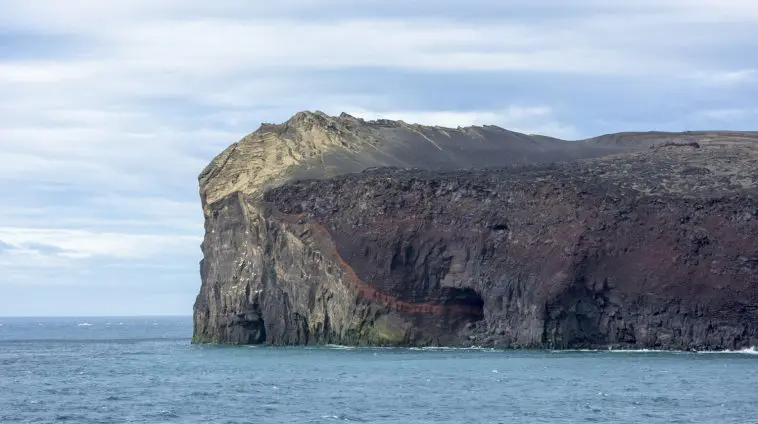
Surtsey Island emerged from a volcanic eruption on November 14, 1963, 20 miles off the southern coast of Iceland.¹
The volcanic eruptions continued on and off for three years, eventually building an island with an area of a square mile. Geologists explored the new island as early as the spring of 1964, and they were amazed by what they found.
After only a few months, there were already sandy beaches, gravel banks, cliffs, and boulders worn by the powerful surf.

After only four years, one geologist wrote:
On Surtsey, only a few months sufficed for a landscape to be created which was so varied and mature that it was almost beyond belief.²
The surprise of this geologist is understandable. The prevailing belief is that these land features should have taken hundreds of thousands to millions of years to form, yet observation dictated only four years. This geologist didn’t know what to do when his beliefs and observations didn’t match.
In the magazine New Scientist, the January 2006 edition states:
“The island has excited geographers, who marvel that canyons, gullies and other land features that typically take tens of thousands or millions of years to form were created in less than a decade.”
How does the author know that they take so long to form?” Has he, or anyone else, witnessed these land features take this amount of time? Of course not! Yet, it never crosses his mind to consider that the belief of long ages is just that, a belief.
Even biologists were surprised at the short time it took for plants and animals to colonize the island. It is usually assumed to take thousands of years for an ecosystem to develop to support life. And yet, observation tells the real story. In the same New Scientist article, the author continues,

There was no complex evolutionary adaptation to the surroundings nor even a replication of ecosystems on neighbouring islands. What came, came.
Seagulls started coming to Surtsey just two weeks after land first appeared, and researchers have been keeping an eye on the animal life ever since. Several nest sites started appearing in 1966, and with these sites came bird droppings.
Volcanic rock is very porous and doesn’t retain water well; plus, there was no humus to take root in. But when nesting sites started to appear, so did plants, thanks to bird poop.
By 1970, mosses and lichens started to appear, and shortly after that, the white flowers of the sea rocket, as well as lyme grass, sea sandwort, cotton grass, and ferns started appearing, seeds brought in by the wind or on the feet of seabirds. By 2005, 51 plant species, including 4 shrubs, were found growing on this new island.
Insects also found a home on Surtsey Island. By 1970, spiders came, ballooning across the ocean on silk threads, moths flew in on the wind, while midges, mites, ticks, springtails, and beetles were carried across by floating debris.
Geese began spending the spring and summer grazing the land’s vegetation, and snow buntings were soon eating the insects and seeds the new island provided. Since 2005, 89 species of birds have been sighted, of which 12 breed on the island. The Icelandic Institute of Natural History reports:
“We now have a fully functioning ecosystem on Surtsey.”
Sceptics insist that the biblical timeline is wrong by stating that earth’s geological features needed millions of years to form, and the animal and plant ecosystems’ recovery from the Flood would take thousands of years, not the short amount of time as stated in the Bible. But real observations in real time show that it is the skeptics who are wrong. Surtsey Island is another great example of the truthfulness of the Biblical account of history.

It is I who made the earth and created mankind on it. My own hands stretched out the heavens; I marshaled their starry host. (Isaiah 45:12)
Footnote
- Primary source for this article: Creation.com: Surtsey, the young island that ‘looks old’
- Sigurdur Thorarinsson, Surtsey: The New Island in the North Atlantic (English translation by Viking Press in 1967, now out of print), pp. 39–40.