
 Richard William Nelson
[Originally published as the first part of Adaptation, Fifth Principle of Natural Selection]
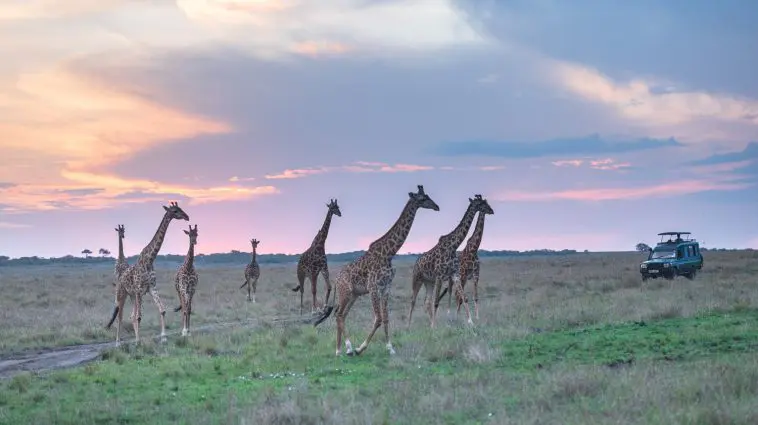
Adaptation is the fifth of the five principles of natural selection introduced by Charles Darwin in The Origin of Species. The long-necked giraffe once served as a popular example of adaptation. Darwin explained:
The structure of each part of each species, for whatever purpose it may serve, is the sum of many inherited changes, through which the species has passed during its successive adaptations.
Advertisement Below:
Two twentieth-century contributors, Ernst Mayr and Yuri Filipchenko, however, developed our modern understanding of adaptation in Earth’s biosphere.
V.I.S.T.A.
Niles Eldredge, of the American Museum of Natural History, introduced the V.I.S.T.A. framework to codify the principles of Darwin’s theory. The five structural principles of natural selection are variation, inheritance, selection, time, and adaptation.
Darwin once argued that adaptation acts as a unifying factor that ultimately leads to the emergence of “new species,” arguing:
“New species have come on the stage slowly and at successive intervals.”
However, our modern understanding of adaptation is a microevolutionary process, not a macroevolutionary process of speciation.
Adaptation-Driven Evolution
Yet, adaptation is not a single process. While variation introduces change, inheritance connects generations, selection filters variation, and time extends intervals; adaptation stems from the culmination of these processes. Darwin explained:
Natural selection generally acts with extreme slowness … by accumulating slight, successive, favorable variations.
Advertisement Below:
Darwin envisioned the adaptive changes of “natural selection” to drive the formation of Earth’s vast biosphere through “descent with modification.” Darwin envisioned:
“From so simple a beginning endless forms most beautiful and most wonderful have been, and are being, evolved.”
In essence, adaptations are nature’s configurations driven by Earth’s biospheric contingencies.
Astronomic Biosphere Contingencies
Earth’s biosphere is subject to continuously changing environmental contingencies. Biological adaptations are essential for survival, including responses to astronomical rhythms.
The Earth’s spin and orbital path around the sun generate seasonal cycles, producing constant, often dramatic swings in temperature, wind, and precipitation.
Simultaneously, the Moon’s rotation around the Earth also causes the flow of Earth’s oceans through alternating spring and neap tides. As a result, the amplitude of these tidal swings can be dramatic, driven by the Moon’s position relative to Earth twice daily.
Planet Biosphere Contingencies
Geological, biological, and anthropogenic contingencies simultaneously threaten the survival of Earth’s biosphere. Evolutionary scientists view these as drivers of natural selection and, ultimately, as the origin of new life forms.
Adaptations emerge from small-scale variation within populations, driven by these environmental contingencies. As a result, the preservation of Earth’s biosphere depends on life’s capacity to adapt. However, while adaptation may explain why biological change occurs – but it does not explain how.

In contemporary biology, adaptation is the emergent fitness advantage arising within populations. The cumulative processes of natural selection are known as microevolution.
Nineteenth-Century Adaptation Concepts
In the introduction to The Origin of Species, Darwin comments on how his Evolutionary predecessor, Jean-Baptiste Lamarck, understood the origin of adaptations, noting:
To this latter agency [use and disuse] he seems to attribute all the beautiful adaptations in nature; such as the long neck of the giraffe for browsing on the branches of trees… are now spontaneously generated. Science has not yet proved the truth of this belief.
While Darwin agreed with Lamarck in principle, he regarded Lamarck’s popular notion of “spontaneous generation” as unscientific. Darwin understood that the scientific framework requires empirically testable observations and measurements. However, Lamarck had none.
By introducing natural selection as the mechanism driving evolution, Darwin opened a new avenue of scientific inquiry. Since adaptations are empirically observable and measurable, natural selection provides a framework for studying evolution scientifically.
However, for Darwin, how Earth’s vast biosphere emerged “from so simple a beginning” is as critical as understanding why.
How, Not Why
Natural selection opened a new avenue, shifting evolutionary studies from ‘why’ to ‘how.’ In the introduction to The Origin of Species, Darwin signals this philosophical shift with a striking prediction:
“The future question for naturalists will be how, for instance, cattle got their horns, and not for what they are used.”
Understanding how nature works is the aim of scientific investigations, a process crystallized in the sixteenth century. Natural selection is understood as the process explaining how evolution works, not why. Viewing the accumulation of “beautiful adaptations” as drivers of the origin, diversity, and survival of Earth’s biosphere, Darwin wrote:
Hence, the structure of each part of each species, for whatever purpose it may serve, is the sum of many inherited changes, through which the species has passed during its successive adaptations to changed habits [use and disuse] and conditions of life.
Yet, while there were reasons why new adaptations emerge, explanations for how adaptations develop remained beyond the reach of science.
For good reasons, Darwin did not use the term “evolution” in The Origin of Species. Before Darwin, the concept of evolution was a mere speculation.
Early Evolution Concepts
Early concepts of adaptive-driven evolution were anchored in logic rather than science, beginning with Greek philosophers, such as Aristotle, beginning in the sixth century BC. Observable similarities among closely related species lent credence to the idea that Earth’s biosphere emerged through the accumulation of successive adaptations.
Evolutionary concepts gained popularity among idealists, particularly during the later Age of Enlightenment, including segments of the church. Likewise, natural philosophers integrated reason and empirical observation, advancing the idea that nature drives orderly, progressive biological change.
In the sixteenth century, Franciscan friar Didacus Valadés devised a copperplate engraving to illustrate a theistic concept of evolution, entitled the Great Chain of Being. Valadés was born in Mexico to a Spanish conquistador father and his Indigenous wife.
By the twentieth century, evolution driven by adaptation had become a cultural norm in global media. However, scientific testing would have to wait for the technological advances of the twenty-first century.
Late Nineteenth-Century Reset
By the nineteenth century, evolutionary concepts offered logical constructs for the history of Earth’s biosphere. However, recognizing the stigmatizing issues with antiquated explanations associated with “evolution,”
Darwin never used the term in The Origin of Species. However, Darwin did use “evolve” sparingly, including the last sentence of all six editions –
“…from so simple a beginning endless forms most beautiful and most wonderful have been, and are being, evolved.”
Darwin aimed to scientifically reframe the understanding of evolution, drawing on observable adaptations. In place of the term “evolution,” Darwin used phrases like “descent with modification,” “natural selection,” “struggle for existence,” and “preservation of favored races.”Gregor Mendel
Yet, by the late nineteenth century, the possibility of validating Darwin’s theory scientifically had essentially been eclipsed. Not until the rediscovery of Gregor Mendel’s (pictured right) laws of inheritance early in the twentieth century did scientific interest in Darwin’s theory re-emerge.
Genomic Revolution
Mendel’s landmark 1865 study presentation, Experiments on Plant Hybridization, upended the reigning popular concept of blending inheritance. Studying pea plants, Mendel established that discrete, non-blending traits that govern inheritance. Although his findings were published the following year in Proceedings of the Natural History Society of Brünn, they gained little interest at the time.
Late-nineteenth-century naturalists eventually came to understand Mendel’s work, which became the foundation of modern genetic inheritance. In contrast to Darwin’s assumptions, Mendel’s particulate model explains how newly acquired adaptations may be transferred from one generation to the next. The breakthrough launched the Genomic Revolution.
Mendel’s predictive framework enabled the mathematical modeling of adaptive changes across generations. This molecular inheritance framework, combined with fossil record data, opened unprecedented opportunities for scientific study of Earth’s biosphere.
In 1895, with this new inheritance model, George John Romanes re-coined Darwin’s theory as “neo-Darwinism.” The new understanding enabled the testing of Darwin’s “transitional link” concept alongside molecular signatures embedded in living and extinct genomes.
Studies on evolution shifted from interpreting the fossil record to decoding how adaptive traits are molecularly modified and inherited.
Adaptation Evidence Shift
The inclusion of genetic inheritance synchronized with molecular phylogenetic adaptations broadened the scope of evolutionary studies. Evolutionary phylogenetics uses molecular data, including DNA, RNA, and protein sequences, to investigate evidence of successive adaptations in closely related species.
Molecular phylogenetic data are more precise and quantifiable than morphology-based data. The integration of natural selection with Mendelian inheritance provides a testable framework for examining the history of Earth’s biosphere.
Adaptive Modeling
In the 1920s and 1930s, evolutionary scientists Ronald Fisher, Sewall Wright, and J.B.S. Haldane broadened the scope of evolutionary studies. Fisher mathematically linked genetic variation to the rate of adaptive change; Wright pioneered the concept of genetic drift; and Haldane integrated mathematical models with empirical observations.
By integrating these approaches, new scientific frameworks emerged to investigate adaptive gene-centric models of evolution. The shift unified evolutionary biology under a shared adaptive framework.
However, by the 1940s, paleontologist George Gaylord Simpson began questioning the power of adaptations to drive “the origin of species.” While natural selection drives changes within a species, the emergence of a new species from an existing species remained questionable.
Simpson’s concern was widely shared among other evolutionary scientists.
to be continued…