 New Creation
[Originally published as the first section of The Novel Traits Conundrum]
By Jake Ramgren
In the 2000 superhero film X-Men, Professor X explains the origin of superpowers. He says,
“Mutation: it is the key to our evolution… But every few hundred millennia, evolution leaps forward.“
The unrelated TV show “Heroes” (2006) offers the same explanation for its own superpowered beings:
The Human Genome Project has found tiny variations in man’s genetic code are taking place at increasingly rapid rates. Teleportation, levitation, tissue regeneration. Is this outside the realm of possibility? Or is man entering a new gateway to evolution? Is he finally standing at the threshold of human potential?
Leaving aside the obviously science fiction elements, the biological process behind these superhero franchises is an observable scientific reality.
Mutations, as the creepy tv-show voiceover ominously said to the audience of “Heroes,” is a mistake in the genetic code: a nucleotide that is either added, lost, or replaced by a different nucleotide. But merely having mutations is not what made these superheroes unique. All humans have mutations, including you and me.
The interesting thing about the X-Men is that their mutations gave them new abilities: superhuman traits that give them a distinct advantage over other people. The theory of evolution relies on the same (albeit less supernatural) process: mutations creating new genes which give organisms new functions in order to eventually result in different organisms. Creationists have long disputed that this is possible, arguing that mutations are always neutral or detrimental to the organism.
The pivotal question thus remains: are mutations the bare materials natural selection uses to install new traits in populations of organisms, or are they the result of Adam’s first sin, which deteriorate or decay the genome? Or, alternatively, are they both?
The History of Genes in Creationism and Evolution
The commonly held viewpoint that mutations and natural selection together drive evolution is the fundamental concept of neo-Darwinism, which was developed by John Scott Haldane and Sewall Wright in the 20th century. This modern synthesis of evolution combined the then-recent rediscovery of genetics with Charles Darwin’s theory of natural selection to give a comprehensive model for the evolution of all living things.
For decades now, young-age creationists have challenged not the existence of random mutations but the implication that positive traits can arise through them. They proposed instead that all genetic information was programmed in the original created kinds by God. In this perspective, all genetic variations within kinds are the result of genes that God built into the original ancestor that survived on Noah’s Ark. God made creatures with genetic potential; there is no “bottom-up” evolution or new information added to the genome. Mutations, meanwhile, are always detrimental mistakes that are incapable of improving anything.
The conventional evolutionary perspective and the contrarian traditional creationist position generally seem to be the only possible explanations of biological traits. But this article considers a third option: a creationist paradigm that incorporates novel traits as a means of adaptation.
What are Traits?
In biology, a trait is a specific characteristic or feature of a living thing. They can be physical traits (such as color or size), physiological traits (such as warm-blooded or having a carnivorous digestive system), or behavioral traits (such as mating calls or migration). Ultimately, any given characteristic of an organism is a trait. Each trait, in turn, is determined by a host of genes. Some genes directly contain the genetic information for a trait while others are regulatory genes that dictate how the trait is expressed. For example, one gene might control hair growth while another gene essentially tells the first gene how quickly to grow the hair.
Traits and genes are important in a creation model. In the generally accepted young-age creationist’s view of biology, Noah’s Ark preserved two of each kind of land-dwelling, air-breathing animal. After the Flood, these representatives diversified into many different species and even genera. Variations within each kind are attributable to smaller-scale adaptations (i.e. “microevolution”) which explain Earth’s biodiversity without the need to appeal to universal common ancestry. In creationism, then, there is no need for new genes or genetic information to appear or evolve.
But what if God did allow mutations to create new information, new genes, and therefore new traits as opportunities for His creatures? Would this inherently be a contradiction to the young-age paradigm? Is it theologically problematic? Or is it just an idea creationists reject based solely on its association with the theory of evolution?
There are two reasons why creationists should accept the natural occurrence of new traits arising in organisms. First, it is crucial to our current creation biology model. Second, it is a phenomenon that we can actively observe in nature!
New Traits Are Essential for Creation Biology
Even young-age creationists who believe no new genetic information can arise naturally believe that genuinely novel traits have appeared physically over time. A quick logical demonstration shows this to be true.

For example, all felines are thought to belong to the same kind. If this is true—and all species of cats descended from two ancestral cats on Noah’s Ark just 4,500 years ago—then many traits must have arisen over time that were (in all probability) not expressed in the original two cats. These include the lion’s mane, the ocelot’s unique coloration, the bone-crushing jaws of jaguar, the large “snowshoe” paws of the lynx, and the habit of leopards to climb trees to eat their prey.
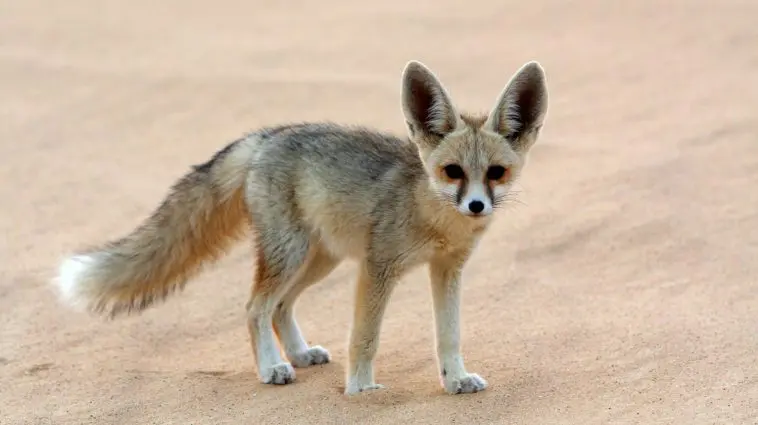
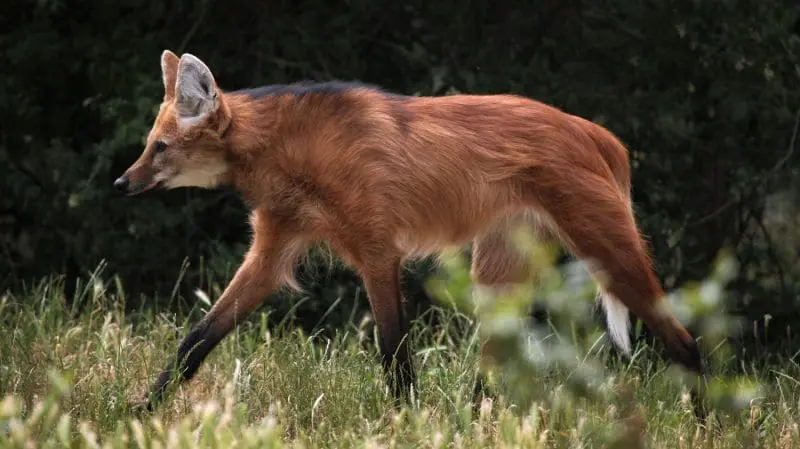
Similarly, in the dog kind, we find a wide diversity of forms, from the maned wolf (with a lion-like mane of fur) to the fennec fox (which has large ears, very little fur, and even a different number of chromosomes!).
Clearly, created kinds contain lots of variation, both genetic and physiological. Is it enough to say all the variation within these kinds is the result of genetic frontloading in the original ark pairs? To many scientists, this seems biologically far-fetched considering the wide range of trait diversity within kinds.
Do Not Be Afraid… of Biology
Creationists should not be afraid to accept that new biological traits arise in populations over time. But should they also concede that mutations can add genetic information that creates new traits? Or is that giving too much ground over to the evolutionists?
Much of this conversation boils down to how one defines “new information” which could be as simple as a random nucleotide addition and as dramatic as an entire gene duplication. It is one thing to say organisms can express new traits that were already genetically present in the genome, perhaps in a silent gene that was suddenly “turned on” (i.e. epigenetics). It is another claim entirely that mutations can create new functional genes and novel traits that were not present before.
Creationists have done excellent work demonstrating the reality of the former but are usually skeptical or dismissive of the latter.
To be continued…