
 Jay Wile
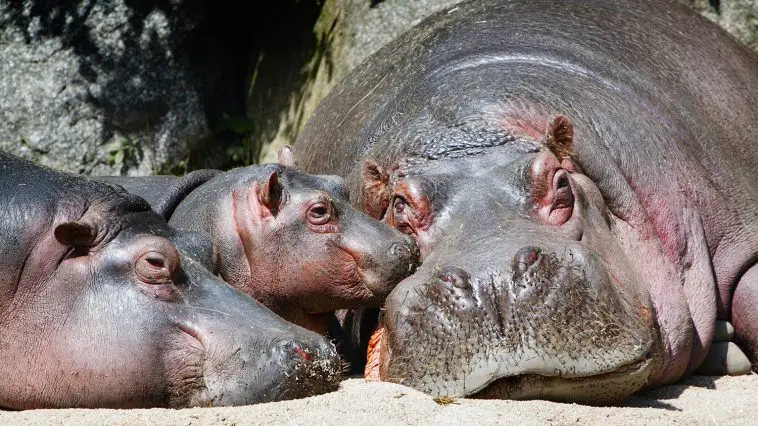
[Originally published as Hippopotamus “Sweat”]
I am currently in Thailand, speaking at a family education conference. There are a lot of incredibly wonderful families here, and not surprisingly, some of them feel a bit overwhelmed at homeschooling their children in Asia. To all those homeschoolers in the United States: be thankful for all the support that exists where you live. Home education is difficult enough when there are support groups, easy access to curriculum, and homeschooling conferences that showcase multiple speakers and vendors. Imagine trying to homeschool with without such luxuries. That’s what these families do every day.

Because I am one of the few speakers at this conference, I have been giving a lot of talks. However, my favorite thing to do is answer questions. As a result, one of my scheduled times with the parents was simply a question/answer session. It went really well, and I hope I helped these parents with their unique situations. I was also scheduled for two sessions with the teens, and I made one of them a question/answer session as well.
When you offer a one-hour time slot for questions and answers, there is always a risk. What if the attendees have no questions? What if they have a couple of questions, but not nearly enough to last for an hour? I honestly didn’t think this would be an issue for the parents, since they face so many challenges homeschooling where they are. However, I did worry about the teens. While I was sure they had lots of questions, I was afraid they wouldn’t be “brave” enough to ask them in a group setting. To reduce the risk, then, I offered free candy for every question. Not surprisingly, the teens ended up having plenty of questions.
One of the reasons I love answering questions is that I often learn something new in the process, and this conference was no exception. The second question I got from the teens was:
What is the color of hippo sweat?
I honestly told the student that I had no idea, which is something every scientist should be comfortable admitting. I assumed it was clear, just like the sweat of all the mammals of which I am aware. I asked the teen what motivated his question, and he said that he heard hippos sweat blood. I told him I thought that was impossible, but I would look into it.
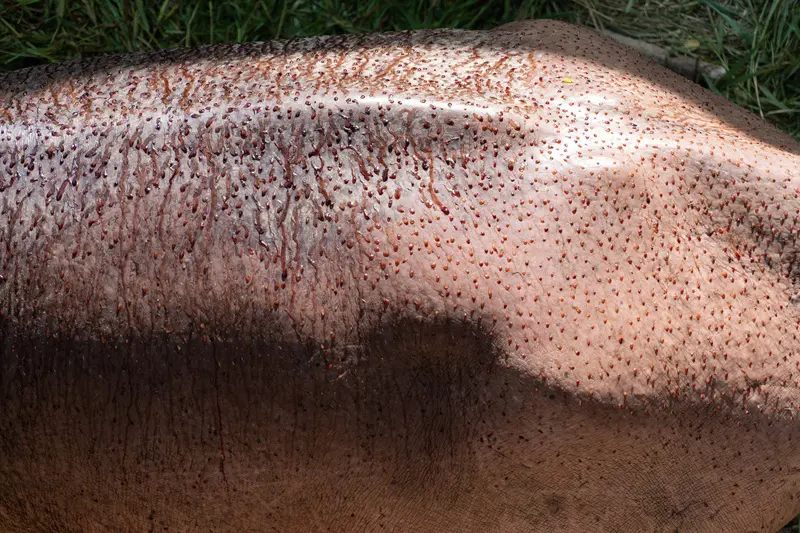
Well, I just finished looking into it, and the answer is fascinating! First of all, hippos don’t actually sweat, because they don’t have sweat glands.1 However, they do have glands that produce a thick, sticky substance which covers the skin. It starts out clear, but it turns red within minutes of being exposed to the sun. Over time, it eventually turns brown.
This, of course, is why the student heard that hippos sweat blood. Since the sticky substance turns red, it probably looks like blood is coming out of hippo’s skin. Without any obvious wounds to explain where this “blood” comes from, it makes sense that the casual observer would think that a hippo is sweating blood. Indeed, the circus that produced the poster at the top of this article obviously expected all its customers to draw that conclusion.

What’s the purpose of this sticky substance?
In 2004, some Japanese researchers figured that out. They analyzed the substance and found that two of the important ingredients were hipposudoric acid, which is red, and norhipposudoric acid, which is orange. Both of these acids strongly absorb ultraviolet light. In addition, hipposudoric acid has strong anti-bacterial properties. Thus, the two acids act as a sunscreen, making sure that any skin exposed to the sun is not sunburned. In addition, the red acid keeps the hippo free from bacterial infection.2
Interestingly enough, all hippos that have been studied produce the same sunscreen/antibiotic, despite the fact that the specific plants they eat can be quite different. As a result, the current hypothesis holds that this substance is not a byproduct of the hippos’ metabolism. Instead, hippos probably purposely manufacture it from relatively basic chemical ingredients, such as tyrosine, an amino acid found in all plants.
So we finally come to an answer for my teen questioner: Hippo sweat has no color, because hippos don’t sweat. However, they do secrete a clear mixture of chemicals that covers their skin. The chemicals turn red within minutes and then eventually turn brown. The purpose of this interesting mixture is to protect the hippos’ skin from sunburn and infection.
Isn’t God’s creation amazing?
REFERENCES
- The Encyclopedia of Animals: A Complete Visual Guide, George McKay ed., University of California Press 2004, p. 203
- Saikawa Y, Hashimoto K, Nakata M, Yoshihara M, Nagai K, Ida M, and Komiya T, “Pigment chemistry: the red sweat of the hippopotamus,” Nature 429:363, 2004